
AI SOFTWARE WarriorPlus
History Co-Author Review 2026: Narrative History & KDP Risks
Research-first narrative history writing with Claude and ChatGPT
Sponsored link authorized by the publisher; affiliate tracking and merchant checkout conditions have not been independently verified.
Quick verdict
History Co-Author by Soren Jordansen, The Copy Viking, is a prompt-driven method for planning and writing source-grounded narrative history using a separate Claude or ChatGPT account. Core includes Narrative History framework, guided setup, style rules, training and Studio integration. Six extra genre kits plus History Editor are separate. Launch week October 2 price $17, then $27 or more; current referral checkout unverified. Vendor advertised 14-day refund, but buyer must confirm final terms. No source or KDP approval guarantee.
Who it may suit
Creators comparing features, workflows and their own production needs.
Potential strengths
- Strong focus on documented primary and secondary evidence Guided multi-stage book planning Historical source and quotation review boundaries Persistent project bibles and chapter state Repeatable chapter-by-chapter process Training and Studio workflow aids advertised
Check carefully
- Not standalone software Claude or ChatGPT model access is separate AI may still fabricate sources or dates despite prompt rules Human historical fact-checking required Optional Genre Vault and specialist tools cost extra No guaranteed KDP approval or royalties Current checkout price and refund unverified
Ready to explore History Co-Author?
See current features, package terms, licensing and refund details on the vendor website. This review does not guarantee availability or outcomes.
Sponsored link authorized by the publisher; affiliate tracking and merchant checkout conditions have not been independently verified.
History Co-Author review (October 2026): History Co-Author is a structured prompt-and-training system for narrative nonfiction made by Søren Jordansen, also known as The Copy Viking. Its promise is to help writers plan, research, draft and document a history book using an existing Claude or ChatGPT account. It is aimed at stories about real people, real events, historical evidence, chronological constraints and readable narrative, rather than novels or push-button ebooks.
Key distinction: Despite appearing in software and AI marketplace categories, the product is not a hosted manuscript generator, self-contained fact-checking service or a subscription that supplies its own AI model. It consists of writing frameworks, setup prompts, style rules, Studio workflow integrations and training to use in your own supported AI workspace. The publisher remains responsible for source accuracy, copyright, formatting and KDP compliance.
How this review was prepared: We examined the seller’s official JV description and the founder’s published breakdown of the core product and Genre Vault, checked the original promotional image and example book covers, and compared the product’s positioning with Amazon’s public KDP requirements. We did not buy the course, inspect authenticated customer downloads, run the workflows or publish a completed book with it. This is a source-based buyer analysis, not an independent quality or earnings benchmark.
Quick verdict: The useful idea is a structured research-first writing method with persistent files and explicit rules against unsupported dialogue and invented thoughts about documented people. It could be attractive to a writer who already understands fact-checking and uses Claude or ChatGPT. It is a poor fit for someone wanting factual guarantees, fully hands-free publishing, or one price that includes an AI subscription and every optional niche expansion.
Explore History Co-Author Check the current license, AI-service requirements and checkout terms.
What is included in the core History Co-Author package?
According to the vendor’s own launch material, the base package focuses on one genre: Narrative History. Its purpose is to make true historical events readable as scenes without pretending unrecorded feelings or dialogue of named people are documented facts. The basic product includes the Narrative History framework, a setup system, style guidance, training and Narrative History Studio integrations; optional advanced genres and editing/promotion products are sold separately.
More detailed third-party inspection of a purchased product describes three principal Markdown resources: a roughly 700-line framework, an approximately 860-line guided setup prompt and a shorter style pack. The seller describes a 29-module course and integrations for Claude Cowork and ChatGPT Work. Treat these as the components advertised or reported by the buyer, not independently inspected materials by Top Deal Discoveries. Exact delivery and platform compatibility should be confirmed in the current member area before a purchase decision.
Why the distinction matters: A bundle of instruction files can be reused and adapted, but a file does not run a research agent by itself. Your AI account supplies the actual models, research capabilities, file access and usage allowance. Any separate AI charges, plan limits, integrations or service changes remain relevant even if the History Co-Author framework itself is advertised as a one-time product purchase.

How does the research-to-book workflow work?
Stage 1: Select a true story and a viable historical record
Choose a specific event or cluster of events: an expedition, siege, trial, disastrous decision, overlooked conflict or rescue. A broad topic such as “the entire Roman Empire” is less useful than a contained episode with named actors, a clear turning point and traceable contemporary evidence. Before drafting, ask whether enough reliable sources exist to support a full book, whether the relevant rights are clear and whether the available record can support a narrative without making up crucial facts.
The seller’s materials describe an 18-step setup conversation intended to settle the subject, fresh angle, structural shape, narrator position, voice and research scope before writing. One published purchaser walkthrough says this yields five planning files: a Book Bible, Research Bible, People/Places/Entities reference, Chapter Outline and Book State. This is much more deliberate than asking a generic AI assistant for a completed book in one prompt.
Stage 2: Build a research record before generating scenes
The strongest theoretical guardrail is separation between what historical records establish and what a storyteller might merely infer. A good workflow assigns each quotation a source and status, records competing accounts, distinguishes contemporary testimony from later retellings, and keeps uncertain details out of definitive scenes. A cited quotation should be checked against its original document or reliable edition: language models can fabricate or subtly alter page numbers, dates, titles and quotations.
A purchaser’s file-by-file review describes quote-status labels such as EXACT, PARAPHRASE, TRANSLATED and unconfirmed candidates, along with a list of material that must not be used. That is a useful design principle, but having a rule in a prompt is not independent evidence that every AI output will obey it. The researcher needs to check actual primary and secondary materials, source editions and bibliographic metadata.
Stage 3: Lock context before each chapter
Long books are especially vulnerable to drift: spellings change, geography blurs, real people know things too early, and key events are retold differently later. History Co-Author’s described approach maintains structured book state and chapter-specific constraints. A purchaser’s examination reports a pre-chapter Context Lock that restricts usable quotations, people and supporting facts. The writer is expected to review the chapter and update the persistent record before moving forward.
For nonfiction, an apparently minor error can undermine credibility. A battle scene may require exact unit positions, distances, weather, command changes and document timestamps; a biography may need letters and contemporaneous accounts to justify a person’s actions. A research record helps audit these elements, but the human author must still reconcile contradictory historical evidence and state uncertainty fairly.
Stage 4: Draft one chapter at a time
The seller promotes narrative storytelling rather than encyclopedia-like summary. Its record-bound core explicitly avoids inventing private thoughts, invented dialogue or fabricated named historical characters. Atmospheric description must not become a back door for false evidence. When a source cannot establish exactly what someone felt or said, the writer should report what is documented or acknowledge the uncertainty; a fluent scene is not a license to alter history.
Working chapter by chapter creates useful checkpoints: identify the narrative question, check verified details, write a chapter, audit statements and continuity, revise voice, and update the Book State. The vendor’s Studio add-ons are described as helping with project setup, chapter generation and closeout inside the supported AI workspace. The precise supported accounts, workflows and availability of those integrations need confirmation before purchase.
Stage 5: Assemble historically responsible back matter
At completion, the framework is described as helping prepare a cast of characters, notes on names and historical sources, chapter notes and a selected bibliography. These are valuable aids for serious nonfiction only if every citation has been validated. A bibliography automatically derived from AI text can contain nonexistent titles, inaccurate publishers, wrong years or phantom quotations. Build a source audit, not just a polished looking reference list.
View History Co-Author Contents Check the current license, AI-service requirements and checkout terms.
What makes the truth rules different?
History Co-Author’s developer draws a deliberate boundary. In the base Narrative History kit, real people may only be portrayed in ways the surviving record can support. The seller says it will not invent what a named person thought or create fictional private dialogue for that person. This is stricter than many AI storytelling prompts and is a sensible rule for a fact-based book marketed as nonfiction.
But the framework cannot confirm its own accuracy merely by issuing rules. An AI assistant may summarize a nineteenth-century memoir without recognizing that the memoirist was unreliable, mistake a similarly named person, attach a quotation to the wrong edition or infer a causal link without evidence. Critical assessment of sources, especially colonial, military or religious records, remains the writer’s responsibility.
A sensible real-world test would take a well-documented episode, supply five primary documents and several modern scholarly sources, then independently evaluate ten quotations, ten dates, named places and the chapter’s cause-and-effect logic. Record all unsupported claims and the time required to correct them. We have not conducted this test and will not substitute the seller’s claims for an independent result.
What about the optional History Genre Vault?
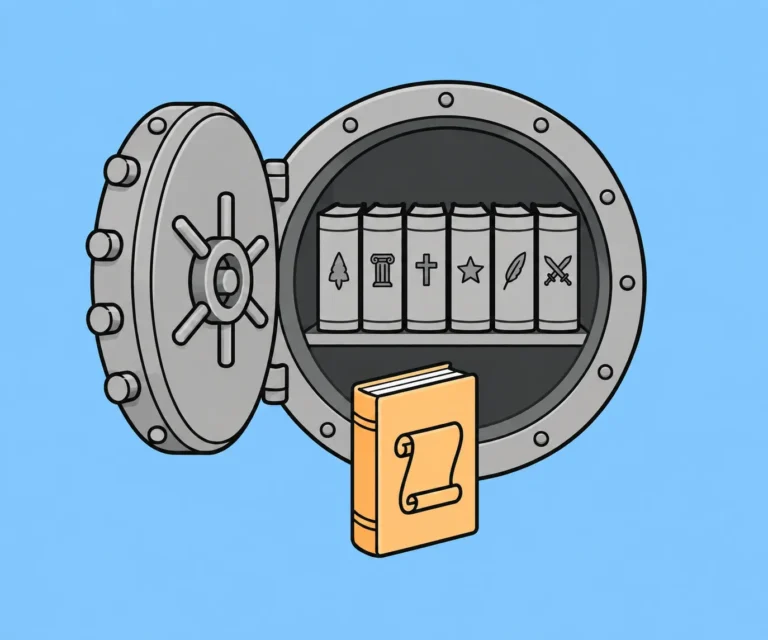
The vendor makes clear that the six extra frameworks are separate from the core product. They are not simply different cover templates: the genres permit different narrative choices, degrees of reconstruction and target readers. The official founder’s breakdown describes Historical Biography and Battles & Campaigns as record-bound specialists, while other kits permit some reconstruction provided it does not contradict evidence.
| Genre kit | Vendor-described focus | Important buyer consideration |
|---|---|---|
| Historical Biography | One person’s documented life and witnesses | Requires enough trustworthy life records |
| Battles & Campaigns | Command decisions, chronology, terrain and soldiers | Military evidence and position accuracy |
| Ancient World | Ancient societies with incomplete testimony | Some reconstructed scenes may be allowed |
| Narrative Prehistory & Archaeology | Archaeological reconstruction and discovery | Clearly label conjectural people/scenes |
| Christian History | Historical narrative from declared faith framing | Understand how theological and historical claims differ |
| Young Readers History | Age-tailored historical narrative | Age-appropriate accuracy and reconstruction |
Some Vault kits explicitly allow fabricated dialogue or reconstructed people where a credible source base is thin; the founder says these projects should disclose the reconstruction in an Author’s Note. That may suit clearly labeled narrative reconstruction, but it is a different factual claim from a strictly source-bound nonfiction book. Before producing a title, decide what the audience is being promised, and make that distinction visible.
For a buyer who only wants to write a documentary-style history of one real conflict, the regular product may be enough. Paying more for six specialist frameworks makes sense only if those genres will be used. The seller’s older launch examples show different optional bundles with different prices; the current WarriorPlus checkout, not a historical JV graphic, determines what is actually included.
Vendor-supplied example book covers
The official affiliate presentation shows a series of history book covers associated with the vendor’s publishing examples. These images establish what the seller is presenting, not an independent demonstration of authorship, KDP acceptance, paid rankings or sales. A cover screenshot cannot verify a manuscript’s bibliography or factual accuracy.



History Editor, cover tools and publishing upgrades
Beyond the core and Genre Vault, the launch documentation lists a separate History Editor designed to check a manuscript against its research record, plus an optional Cover Creator and A+ Author Toolkit and a Promo Stacker focused on marketing. A Ghostwriter License appears as an order-bump item. The affiliate funnel also advertises a recurring KDP Club community or mentoring component in some packages.
These are not automatically free product benefits. We do not list numeric upsell prices because the funnel can change, and we have not independently completed the purchase flow for the current edition. A potential buyer should ask which exact modules are included now, what rights apply to ghostwriting for clients, whether future updates are provided and whether any recurring charges are being added at checkout.
History Editor is especially interesting in theory because it would compare drafted narrative against earlier research. Yet a prompt-based fact-checker can repeat the same errors as the generating model or accept an invented citation. Treat any automated editorial finding as a review suggestion until a human checks the underlying historical source. It is not an academic peer-review substitute.
Pricing in October 2026 and ongoing costs
The founder’s dated launch announcement advertised $17 for launch week beginning October 2, 2026, with the price rising to $27 or more afterward. The launch price has passed as of this review’s publication on October 15, so it must not be advertised as a currently guaranteed $17 purchase. We have not independently confirmed the exact amount charged by today’s referral checkout. Click through and check the current invoice before ordering.
The framework itself was presented as a one-time product purchase, but it relies on your own Claude or ChatGPT access. The seller suggests a paid AI account, commonly described around $20 per month in older sales materials; actual subscription prices, availability, agentic features, fair-use policies and caps are controlled by the external AI provider. Additional specialist kits, editing resources or memberships may be separate purchases. Amazon KDP itself does not charge an upfront fee merely to publish a book, but cover creation, professional editing, research, licensing and advertising may still cost money.
Refunds: launch-period reviews and sales materials report a vendor-advertised 14-day money-back guarantee. We have not submitted a claim or confirmed how it applies to today’s product edition, bundle, third-party AI subscriptions or optional memberships. Read the seller’s and WarriorPlus checkout terms and retain the receipts. A guarantee on the prompt kit should not be interpreted as a refund promise for your separate Claude/ChatGPT subscription.
Check History Co-Author Pricing Check the current license, AI-service requirements and checkout terms.
Amazon KDP: content quality, disclosure and originality
A nonfiction book prepared with History Co-Author still needs to satisfy KDP’s content guidelines. Amazon requires publishers to disclose AI-generated text, cover images and interior images when the AI generated the actual content, including material heavily edited afterward. Purely AI-assisted editing of material written by the author has different disclosure treatment. See Amazon KDP Content Guidelines.
Accuracy is not just a matter of automated citations. Historical books often involve competing eyewitness accounts, translations and interpretations. Quote from authorized editions, verify archival identifiers, correct the geography and put the proper limits on claims. When depicting Reconstruction or speculative scenes, identify them as such so readers understand where evidence ends. Amazon can refuse misleading or poor-quality books; publication is not guaranteed by a prompt framework.
Public-domain trap: Using an old text in a project does not necessarily give the author ownership of an edition, translation, photograph or introduction. Amazon has special rules for undifferentiated public-domain material and may reject copies that provide no meaningful difference from a free Amazon edition. Consult KDP Public Domain Content rules and document the actual rights before uploading.
Do not confuse a well-organized chapter plan with publishable research. The strongest reader value comes from original analysis, thoughtful source selection and transparent treatment of uncertainty. Good notes and a bibliography help when they can be checked; one fictional source in a footnote can damage the entire book.
Practical example: a short historical campaign book
Imagine researching a documented regional campaign. Define its time window, key question and primary evidence; build a chronology of decisions, dispatches and engagements; note which casualty counts are disputed; identify exactly where troops moved on credible period maps; separate first-hand letters from later folklore; and choose one or two people whose perspectives actually survive in the record. The framework could organize these choices and keep a stable terminology list as chapters are drafted.
Before a chapter about a battlefield, cross-check distances, sightlines, travel times and weather against primary maps and reliable historians. When an officer’s motive is not documented, narrate their observed decision rather than inventing their internal monologue. When a source contradicts another, mention the difference explicitly or justify the account selected. During final editing, verify every footnote and the quoted passage in the underlying document, not merely the AI’s reference list.
This example illustrates a safe workflow rather than a book we produced with the kit. Writers who already use reference-management software, source archives and persistent story bibles should compare the framework against their current process, because much of its value is systematic discipline rather than an exclusive AI model.
Who should consider History Co-Author?
- Narrative history enthusiasts: want a guided framework for real events and source-driven stories.
- Experienced KDP nonfiction publishers: can independently check citations, research and ebook formatting.
- Authors already paying for Claude or ChatGPT: may appreciate reusable instruction files rather than learning a completely different writing app.
- Small editorial teams: could adapt planning documents and chapter states as a collaboration standard, subject to the product’s license.
Who should probably skip it?
- Anyone expecting a one-click, error-free book generator or guaranteed Amazon income.
- Readers looking primarily for romance, thriller or other fiction-writing systems.
- People unwilling to perform sustained source verification, copyediting and formatting work.
- Buyers who assume the product automatically includes the Genre Vault, History Editor, commercial ghostwriting license, all cover tools and a paid AI subscription.
- Researchers whose work demands rigorous professional peer review, specialist archival access or formal scholarly citation without manual verification.
Pros and cons
Potential advantages: strong emphasis on records and quotations; an 18-step book planning method; persistent project bibles and Book State; chapter-by-chapter checkpoints; a narrative voice framework; related training; integrations advertised for ChatGPT Work and Claude Cowork; optional genre tools for different historical writing tasks.
Material trade-offs: not standalone software; external AI usage and subscription requirements; human research and citation validation still mandatory; specialized genres and editing products cost extra; model and workflow integration details may change; stylistic rules may not consistently be obeyed by AI; no hands-on performance verification or guaranteed sales.
History Co-Author frequently asked questions
Is History Co-Author a software application?
No. The core product is a structured collection of prompts, planning and style resources, training and compatible workflow integrations that run inside a separate Claude or ChatGPT environment.
Does the standard package write historical biographies and children’s history too?
The regular product is for Narrative History. Historical Biography and Young Readers History are distinct specialist kits in the optional Genre Vault, not included by default.
Can it guarantee historically accurate dates and quotes?
No. Its prompts aim to prevent unsupported claims, but AI can still invent citations, misquote sources or make chronology errors. Independently inspect original records.
Is the launch price still available?
That figure was advertised for the October 2 launch week. The seller said the price would rise to at least $27 afterward. We have not confirmed the current referral checkout amount; do not assume the launch price remains active.
Do I need ChatGPT or Claude separately?
Yes. The framework uses your own AI workspace. Your account tier, model availability, monthly payments and usage policies are independent of the History Co-Author purchase.
Does it include a book cover or Amazon publishing service?
It provides guidance and is marketed toward KDP publishing, but cover-generation add-ons and other higher-tier features are separate. KDP publication must be completed by the author and is subject to Amazon acceptance.
Does it work with ChatGPT Work and Claude Cowork?
The vendor advertises Narrative History Studio workflow integrations for those surfaces. Compatibility, installation and feature entitlements should be checked in the current member area; we have not tested them.
What does the money-back guarantee cover?
Historical seller descriptions state 14 days for the core product. Today’s specific checkout terms, AI platform subscriptions, add-ons and optional recurring programs require separate confirmation.
Is there a History Co-Author coupon?
We found no independently verified current code for the product. No invented coupon is presented. Browse the site’s Coupons & Discounts directory for other sourced software promotions.
Final verdict: an editorial method, not a historical truth machine
History Co-Author offers a distinctive approach: a book-first research and writing process designed to constrain AI storytelling to evidence. Its main value is repeatable structure, especially for people who otherwise jump from an appealing history topic straight into unverified prose. The same disciplined approach can also be assembled manually, but the appeal of a commercial system is having its instructions, workflow and training prepared for you.
For the right author, the product may be a practical starting point. For readers expecting automated academic research, a paid AI model included in the license, all six genre kits or profit guarantees, it would be the wrong purchase. Check the current checkout, test a short sourced chapter, verify every quote and only then commit to a full book.
Explore History Co-Author Check the current license, AI-service requirements and checkout terms.
Sources and disclosure: Seller’s official History Co-Author JV page; Søren Jordansen’s September 24, 2026 official product breakdown; independent Amazon KDP Content Guidelines and Public Domain Content policy. Third-party purchased-kit review consulted for reported file composition but is not represented as our own testing. Date checked: October 15, 2026. Product visuals are official vendor/JV materials; they are not our firsthand outputs. This article includes publisher-authorized sponsored purchase links and may earn a commission; prices, refunds, AI usage and upgrade entitlements are seller-controlled.
A closer look at the creative toolkit
These are promotional illustrations. They do not show independently measured performance.


Advantages & limitations
Advantages
- Strong focus on documented primary and secondary evidence Guided multi-stage book planning Historical source and quotation review boundaries Persistent project bibles and chapter state Repeatable chapter-by-chapter process Training and Studio workflow aids advertised
Limitations / unknowns
- Not standalone software Claude or ChatGPT model access is separate AI may still fabricate sources or dates despite prompt rules Human historical fact-checking required Optional Genre Vault and specialist tools cost extra No guaranteed KDP approval or royalties Current checkout price and refund unverified
Ready to explore History Co-Author?
See current features, package terms, licensing and refund details on the vendor website. This review does not guarantee availability or outcomes.
Sponsored link authorized by the publisher; affiliate tracking and merchant checkout conditions have not been independently verified.