Best Travel Backpacks for Weekend Trips and Carry-On Packing
A travel backpack for weekend trips can make short travel easier, cleaner, and more organized. The right backpack should hold enough for two or three days without feeling bulky, awkward, or difficult to carry through airports, train stations, hotels, or busy city streets.
A weekend bag sounds simple until you start packing. Clothes, shoes, toiletries, chargers, documents, snacks, and a laptop can quickly turn a small trip into a messy bag. That is why choosing a travel backpack for weekend trips is not just about size. It is about layout, comfort, access, and how well the backpack fits the way you actually travel.
In this guide, you will learn what to check before buying a travel backpack, what features matter most for carry-on packing, and how to avoid choosing a bag that looks good online but becomes frustrating after one trip.
What makes a good travel backpack for weekend trips?
A good travel backpack for weekend trips should do three things well: carry your essentials, keep them organized, and remain comfortable when fully packed. If it fails at any of those, the trip becomes less convenient.
For short trips, you usually do not need a huge hiking backpack or a hard-shell suitcase. You need something flexible enough for clothes and personal items, but structured enough that everything does not collapse into one messy compartment.
The best travel backpack for weekend trips should feel easy to open, easy to pack, and easy to carry. It should also match your travel style. A person taking city breaks will need different features from someone packing for outdoor weekends, budget flights, or business travel.
Before buying, think about your usual trip length, your transport style, and whether you travel with a laptop, camera, extra shoes, or only basic clothes.
Choose the right size before looking at style
Size is the first thing to check. A backpack can look perfect in photos but feel too small once you start packing for two nights. It can also be too large, which makes it uncomfortable and harder to use as a carry-on.
For most weekend trips, a backpack in the 25L to 40L range is usually practical. Smaller bags are better for light packers, overnight stays, and warm-weather travel. Larger bags work better when you need extra clothes, shoes, or tech gear.
A travel backpack for weekend trips should not force you to pack like you are going away for two weeks. If the bag is too big, you may fill it just because the space is available. That adds weight and makes the backpack harder to carry.
Think about the actual items you pack most often:
- two or three outfits
- underwear and socks
- toiletries
- phone charger
- travel documents
- headphones
- light jacket
- laptop or tablet
- one pair of extra shoes, if needed
If those items fit cleanly without squeezing every zipper, the size is probably right.
The right travel backpack for weekend trips should give you enough space without encouraging you to overpack.
Look for a layout that packs like a suitcase
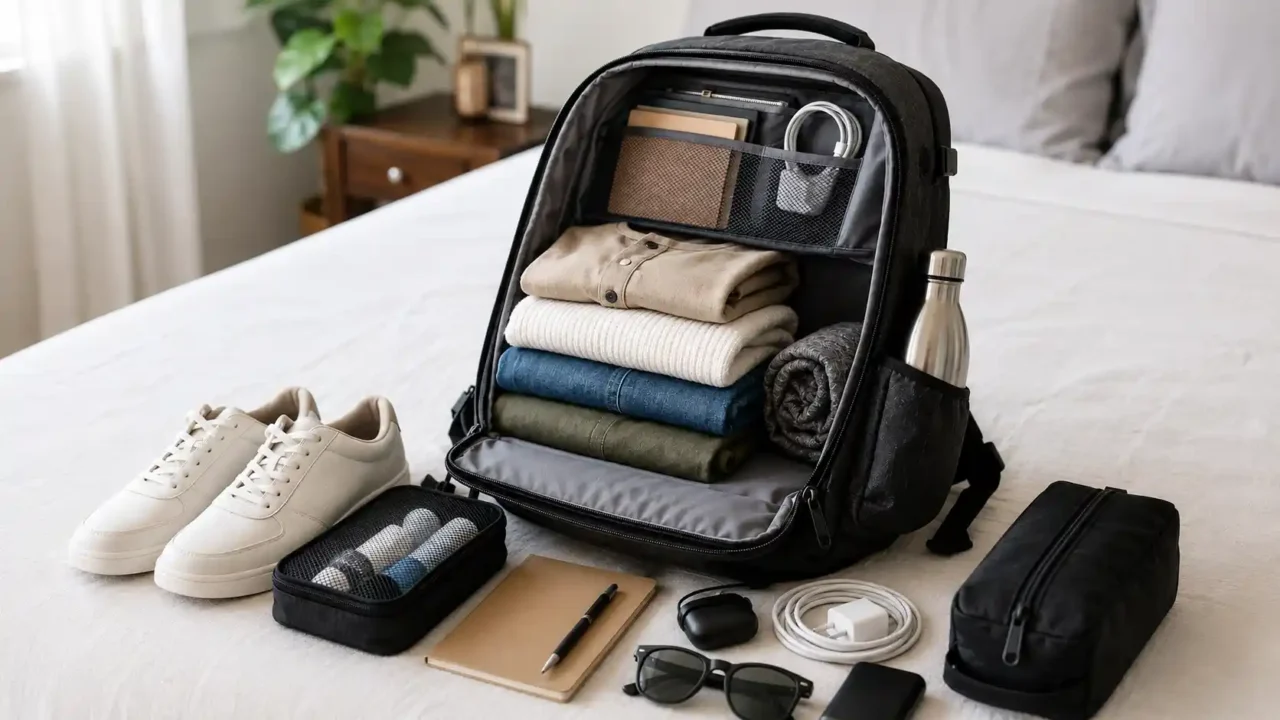
One of the most useful features in a travel backpack is a wide-opening main compartment. Many traditional backpacks only open from the top, which can make packing and unpacking frustrating.
For short travel, a clamshell or suitcase-style opening is usually better. It lets you see your clothes, toiletries, and accessories without digging through the whole bag.
A travel backpack for weekend trips with a suitcase-style layout is especially useful if you stay in hotels, apartments, or guest rooms where you do not want to fully unpack.
Look for a design that allows you to separate items clearly. Compression straps, mesh dividers, and packing cube-friendly compartments can help keep clothes flat and organized.
A simple layout is often better than too many tiny pockets. Too many compartments can waste space and make it harder to remember where everything is.
Check the laptop and tech storage
If you travel with a laptop, tablet, camera, or work accessories, tech storage matters. A separate padded laptop compartment can make a big difference, especially at airport security or when working during a short trip.
The laptop section should be easy to access without opening the entire backpack. It should also protect the device from pressure when the bag is full.
For a travel backpack for weekend trips, tech pockets should not take over the whole design. You still need room for clothes and daily essentials. The best balance is a padded laptop sleeve, a charger pocket, and one or two small organizer sections.
Useful tech storage features include:
- padded laptop compartment
- tablet sleeve
- cable pocket
- small zip pocket for chargers
- easy-access phone pocket
- document pocket
If you already use a lot of phone accessories, chargers, and portable tech, it helps to choose a backpack with a clean organizer panel instead of throwing everything into the main compartment.
Make sure the straps are comfortable
Comfort is easy to ignore when shopping online, but it matters once the backpack is packed. A bag that feels fine when empty can become annoying after walking through an airport or city center.
Look for padded shoulder straps, a breathable back panel, and a shape that distributes weight well. If the backpack is larger, a sternum strap can help keep it stable.
A comfortable travel backpack for weekend trips should sit close to your back. If it pulls backward or hangs too low, it can create shoulder strain.
Also check the top handle and side handle. Weekend travel often involves lifting the bag into cars, overhead bins, hotel rooms, and storage racks. A strong handle makes the bag easier to move when you are not wearing it.
Comfort features worth checking:
- padded shoulder straps
- breathable back panel
- sternum strap
- sturdy top handle
- side carry handle
- balanced weight distribution
- smooth zippers that do not catch
Do not choose a backpack only because it looks slim in photos. If the straps are thin or the back panel has no support, it may not be comfortable when full.
Think about carry-on rules
Carry-on rules vary by airline, route, and fare type. Some airlines allow larger cabin bags, while budget airlines may limit you to a smaller personal item.
A compact travel backpack for weekend trips is especially useful when you want to avoid checked luggage.
A travel backpack for weekend trips should fit the type of travel you actually book. If you often fly budget airlines, check the allowed personal item size before buying a large backpack.
A soft backpack is usually more flexible than a hard suitcase because it can compress slightly when not overpacked. But that does not mean every backpack will fit under a seat or into an overhead bin.
Before buying, check:
- height
- width
- depth
- total packed thickness
- whether the backpack expands
- whether the bag keeps its shape when full
Expandable backpacks can be useful, but they can also become too large for carry-on use when fully expanded. If you travel by plane often, treat expansion as a backup feature, not the default packing mode.
Before flying, it is also worth checking what you can bring through airport security, especially if your backpack includes toiletries, tech accessories, or travel-size items.
Choose materials that fit your trip
Material affects weight, durability, weather resistance, and appearance. A sleek urban backpack may look better for city trips, while a tougher outdoor-style backpack may be better for rougher travel.
For weekend trips, you usually want a material that is light but durable. Water-resistant fabric is helpful, especially if you walk between stations, airports, parking areas, or hotels.
A travel backpack for weekend trips does not need to be fully waterproof for most people, but it should handle light rain and daily wear. Strong zippers and reinforced stitching are often more important than fancy design details.
Common material considerations:
- water resistance
- zipper quality
- stitching strength
- weight
- scratch resistance
- easy cleaning
- shape retention
If the backpack is very lightweight, check whether it still has enough structure. If it is very structured, check whether it becomes too heavy before you even pack it.
A durable travel backpack for weekend trips should feel light enough to carry but strong enough for repeated use.
Do you need a shoe compartment?
A shoe compartment can be useful, but it is not always necessary. It depends on the way you pack.
If you regularly bring extra shoes, gym shoes, sandals, or dress shoes, a separate shoe section can keep clothes cleaner. It can also help separate used items from clean items on the return trip.
However, a shoe compartment can take space away from the main compartment. In some backpacks, it creates an awkward shape when full.
A travel backpack for weekend trips with a shoe compartment makes sense if you often pack footwear. If not, you may get more flexible space from a simpler design and use a separate shoe bag instead.
Ask yourself:
- Do I usually pack extra shoes?
- Are the shoes bulky?
- Do I need to separate clean and worn items?
- Would a shoe compartment reduce main packing space?
- Would a packing cube or shoe pouch work better?
The best choice is the one that matches your real routine, not the feature list that looks most impressive.
Check the front pockets
Front pockets can make a backpack much easier to use during travel. They give you quick access to items you do not want buried inside the main compartment.
Useful front-pocket items include:
- passport
- boarding pass
- sunglasses
- lip balm
- power bank
- phone charger
- earbuds
- wallet
- keys
- snacks
For a travel backpack for weekend trips, quick-access pockets should be secure but not complicated. If a pocket is too hidden, you may forget to use it. If it is too exposed, it may not feel safe in crowded areas.
A good layout gives you one or two useful front pockets, not a confusing maze of zippers. You want quick access, but you also want the bag to stay clean and simple.
Avoid overpacking the backpack
Even the best backpack becomes uncomfortable if it is overpacked. Weekend trips are short, so the goal is not to bring every possible item. The goal is to bring the right items.
A travel backpack for weekend trips works best when there is a little space left after packing. That makes it easier to close the bag, find items, and bring back small purchases.
A simple packing approach works well:
- choose outfits that mix and match
- pack one extra layer
- limit shoes
- use travel-size toiletries
- keep chargers in one pouch
- leave space for return items
- avoid packing “just in case” items unless they are truly needed
If you are buying a backpack because your current bag always feels overloaded, the solution may not be a much bigger backpack. It may be a better layout and a cleaner packing routine.
Before buying, it also helps to check whether a deal is actually useful instead of choosing the largest bag only because it is discounted.
Final thoughts
The best travel backpack for weekend trips is not always the biggest or the most expensive one. It is the backpack that fits your travel style, keeps your essentials organized, and stays comfortable when packed.
Look for a size that matches your usual trip length, a layout that opens easily, enough tech storage if you need it, and straps that can handle real walking. Pay attention to carry-on rules, materials, and whether special features like shoe compartments actually help your routine.
When chosen well, a travel backpack for weekend trips can replace both a small suitcase and a daily backpack.
A good travel backpack for weekend trips should make packing simpler, not more complicated. When the backpack fits your habits, short trips feel easier from the moment you leave home.