A useful online deal is not just a discount. A product can look cheap and still be the wrong purchase if the price, seller, reviews, shipping, or return policy do not make sense.
Sometimes a product is marked down because the original price was inflated. Sometimes the cheaper version is missing an important feature. Sometimes the deal looks urgent, but the same price comes back every week. And sometimes the product is simply not something you needed in the first place.
Online shopping makes deals easy to find, but it also makes impulse buying easier. A bright discount badge, countdown timer, limited-stock message, or “today only” label can make a product feel more important than it really is.
A useful deal is different. It saves money on something that actually fits your needs, comes from a trustworthy seller, has clear return terms, and does not create regret after delivery.
Here is how to check whether an online deal is worth buying before you click checkout.
What makes a useful online deal?
Start with the real price, not the discount. The first number to check is not the discount percentage. It is the actual price.
A product listed as “50% off” can still be expensive if the original price was too high. Some stores raise prices before a sale or use suggested retail prices that do not reflect what the product normally sells for.
Before trusting the discount, compare the current price with:
- the same product on other stores
- similar products from other brands
- the product’s normal price if you know it
- previous sale prices if available
- bundle prices or multipacks
- shipping and taxes
A $40 product reduced from $80 may look better than a $35 product with no discount. But if similar products usually sell for $30 to $40, the “deal” may not be special.
The real question is not “how much is it discounted?”
The real question is “is this a good price for what it is?”
A useful online deal should still make sense after you compare the product with similar options.
Check whether the product solves a real problem
A deal is only useful if the product has a job.
Before buying, ask what problem the product solves. Is it replacing something broken? Saving time? Making travel easier? Organizing a messy space? Protecting a device? Helping with work? Making a daily routine smoother?
If you cannot explain why you need it, the deal may just be a distraction.
Good reasons to buy include:
- you already planned to buy this type of product
- it replaces something you use often
- it solves a specific problem
- it fits your space, device, or routine
- the price is genuinely lower than usual
- the return policy is clear
Weak reasons include:
- it looks cheap
- the timer is running out
- the product photo looks nice
- everyone seems to be buying it
- the discount percentage is large
- you might use it someday
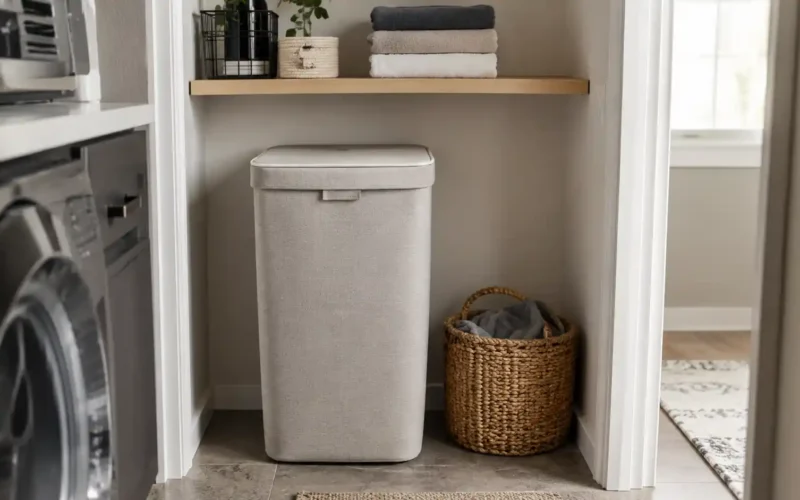
For home organization products, dimensions and materials matter as much as the sale price.
A good deal should feel useful after the excitement fades.
Read the product details carefully
Product photos are designed to make items look good. The details tell you what you are actually buying.
Before purchasing, read the product description and specifications. This matters especially for tech accessories, home products, beauty tools, storage items, travel gear, and anything that needs to fit a specific device or space.
Check:
- dimensions
- materials
- compatibility
- included parts
- power requirements
- capacity
- warranty
- cleaning instructions
- size or color options
- whether batteries, cables, adapters, or refills are included
Small details can change the value of a deal. A charger without the right cable may not be useful. A storage basket may be too small. A phone case may not fit the exact model. A travel bag may look large in photos but be smaller than expected.
Do not rely only on the title. Titles often contain keywords, not complete information.
For smaller purchases like earbuds, comfort, battery life, and return terms can matter more than a discount badge.
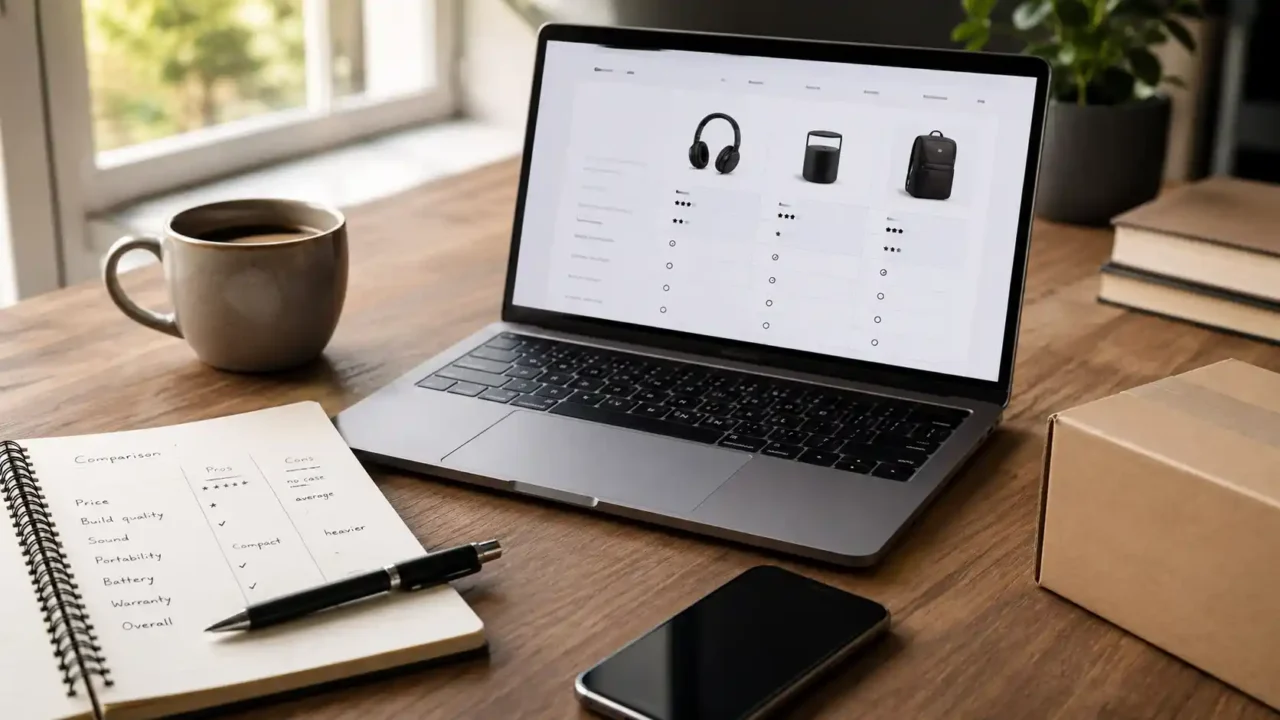
Compare the product with alternatives
A deal can look good until you compare it with two or three similar options.
Before buying, open a few alternatives and compare the basics:
- price
- ratings
- number of reviews
- materials
- size
- warranty
- shipping cost
- return policy
- brand reputation
- included accessories
- recent customer feedback
You do not need to spend an hour researching every small purchase. But for anything you will use often, comparison helps.
Sometimes the sale item is cheaper because it lacks a feature that matters. Sometimes a slightly more expensive product has better reviews, better materials, or better warranty coverage. Sometimes the deal is excellent because it matches the alternatives at a lower price.
Comparison turns a discount into a decision.
Look at recent reviews, not just the star rating
Star ratings can be useful, but they do not tell the whole story.
A product with 4.6 stars may still have problems if recent reviews mention quality changes, shipping issues, missing parts, weak packaging, or poor customer support. A product with fewer reviews may still be good if the feedback is detailed and consistent.
Look for reviews that mention:
- long-term use
- exact product size
- real photos
- comfort or fit
- durability
- setup problems
- compatibility issues
- returns or customer service
- whether the product matched the description
Be careful with reviews that are too vague. “Great product” is less useful than a review explaining how the item was used and what worked or failed.
Also check negative reviews. A few complaints are normal. But if many people mention the same issue, pay attention.
The pattern matters more than one angry review. A useful online deal is easier to trust when recent reviews confirm that the product still matches the description.
Watch for fake urgency
Online stores often use urgency to push quick decisions.
You may see:
- limited time offer
- only a few left
- deal ends soon
- flash sale
- countdown timer
- exclusive today
- price drop alert
- cart reserved for a limited time
Sometimes this is real. Sometimes it is just pressure.
If you are unsure, pause. A useful deal should still make sense after a few minutes of thinking.
Fake urgency works because it makes you focus on losing the deal instead of evaluating the product. That is when people buy things they would normally skip.
A simple rule helps: if you would not consider the product at a normal price, be careful buying it only because it is on sale.
Calculate the total cost
The listed price is not always the final price.
Before checkout, check the total cost, including:
- shipping
- taxes
- import fees
- handling fees
- subscription requirements
- required accessories
- refills or replacement parts
- return shipping if you change your mind
A low product price can become less attractive once fees are added. This is especially true for bulky home items, international shipping, and products that need extra parts.
Also check whether the deal requires a subscription. Some products are cheap upfront but expensive over time because of refills, app access, premium features, or replacement filters.
The best deal is the total cost, not the headline price. The total cost can turn a useful online deal into an average purchase once shipping, taxes, or required accessories are added.
Check the return policy before buying
A return policy is part of the deal.
This matters most for products where fit, feel, or compatibility can be uncertain:
- clothing
- shoes
- phone cases
- earbuds
- furniture
- beauty tools
- home organization products
- travel bags
- electronics
Before buying, check:
- return window
- whether the item must be unused
- who pays return shipping
- whether sale items are final
- refund method
- restocking fees
- warranty terms
- seller location
- customer support options
A product with a slightly higher price but easy returns may be a better deal than a cheaper product that is hard to return.
If the return terms are unclear, be careful.
Check seller credibility
The product may be fine, but the seller still matters.
On marketplaces, the same product can appear from multiple sellers. Some are reliable. Others may have slow shipping, poor packaging, unclear warranties, or inconsistent product quality.
Look for:
- seller rating
- number of completed sales
- recent feedback
- shipping location
- return policy
- customer support history
- whether the seller is authorized if that matters
- whether product photos and descriptions look consistent
For expensive items, seller credibility becomes even more important.
A small saving is not worth a messy return process or uncertain delivery.
For larger purchases, it can also help to review general online shopping safety guidance before buying from an unfamiliar seller.
Avoid buying only because it is trending
Trending products can be useful. They can also be overhyped.
A product may trend because it looks good in short videos, photographs well, solves a common problem, or is being heavily promoted. That does not mean it is right for your home, device, skin, routine, budget, or space.
Before buying a trending product, ask:
- Would I still want this if it were not trending?
- Does it solve a problem I already had?
- Will I use it more than once?
- Does it fit my space or device?
- Are there simpler alternatives?
- Are people still happy with it after a few weeks?
Trends are good for discovery. They are not a substitute for judgment.
Be careful with bundles
Bundles can be a good deal, but only if you need most of what is included.
A bundle may include a main product plus accessories, refills, bags, cables, tools, or extras. The total value can look impressive, but some items may be low quality or unnecessary.
Before buying a bundle, check:
- what you would buy separately
- whether the extras are useful
- whether the main product is still good value alone
- whether the accessories are compatible
- whether the bundle blocks returns
- whether a smaller package would be enough
If you only need one item, a bundle may not save money. It may just add clutter.
A good bundle should reduce future purchases, not create extra things to store.
Know when to wait
Not every deal needs an immediate decision.
Waiting can be smart if:
- the product is not urgent
- reviews are mixed
- the price seems inflated
- a new version may be coming soon
- shipping is expensive
- you are unsure about size or compatibility
- you are buying because of pressure
Some products go on sale regularly. Seasonal items, tech accessories, home goods, beauty tools, and travel gear often return to similar prices.
Waiting is not missing out if the product was not clearly right for you.
A good deal should survive a little patience.
A simple checklist before checkout
Before buying an online deal, ask:
- Do I actually need this?
- Is the current price good compared with alternatives?
- Are the product details clear?
- Does it fit my device, space, or routine?
- Are recent reviews positive?
- Do negative reviews mention repeated problems?
- Is the seller trustworthy?
- Is the return policy clear?
- Are shipping and taxes reasonable?
- Is this still a good purchase without the urgency?
If most answers are yes, the deal is worth considering.
If several answers are unclear, wait or choose a safer option.
Final thoughts
A useful online deal is not just a low price. It is the right product, at a fair price, from a reliable seller, with clear terms.
A useful online deal should leave you with a product you actually use, not another item you regret buying.
The best shoppers do not chase every discount. They compare, pause, read the details, and buy what actually fits their needs.
A good deal should make life easier after it arrives. It should not create clutter, regret, or another return label to print.
Before buying, look past the discount badge. Check the product, the seller, the total cost, and the reason you want it.
That is how you find deals that are actually worth it.