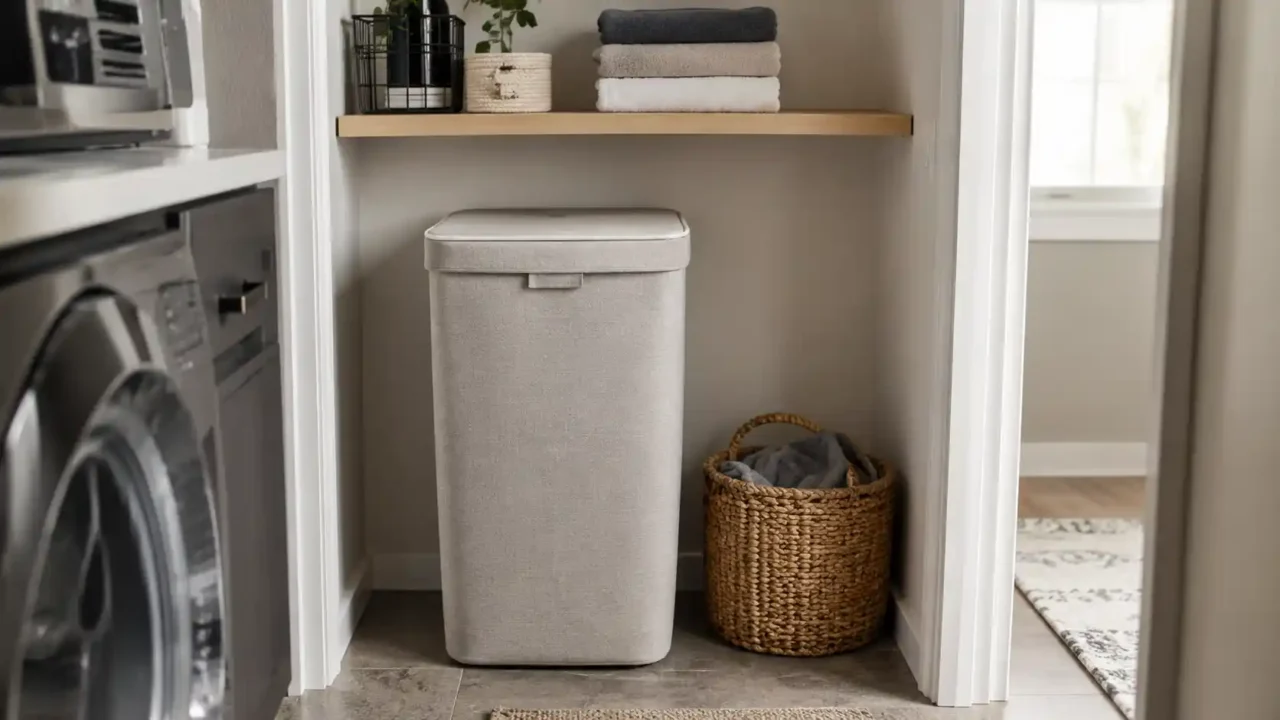
A laundry hamper for small spaces sounds like a simple purchase until it starts getting in the way. The right laundry hamper for small spaces should save floor space, keep laundry contained, and still fit the way you actually wash clothes.
In a large laundry room, almost any basket can work. In a small apartment, bathroom, bedroom corner, closet, dorm room, or narrow hallway, the wrong hamper becomes clutter. It takes up too much floor space, tips over when full, traps odors, or makes laundry day more annoying than it needs to be.
The best laundry hamper is not always the biggest one. It is the one that fits your space, your routine, and the way you actually sort clothes.
Some people need a slim hamper that hides beside a wardrobe. Others need wheels because laundry has to move across the apartment. Some need two or three compartments to separate colors, whites, towels, baby clothes, gym clothes, or delicate items. Others simply need something that looks decent enough to stay visible.
Here is what to look for before buying a laundry hamper for small spaces and organized homes.
Start with the right laundry hamper for small spaces
Before choosing a hamper, measure the place where it will live.
When choosing a laundry hamper for small spaces, width and depth usually matter more than height.
That sounds obvious, but many people buy based on product photos and only realize later that the hamper is too wide, too tall, or awkward to open.
Common places for a hamper include:
- bedroom corner
- closet floor
- bathroom wall
- laundry room
- hallway niche
- under a shelf
- inside a wardrobe
- next to a washer or dryer
A hamper that looks small online can still feel large in a narrow room. Pay attention to width and depth, not only height. A tall slim hamper often works better than a wide basket when floor space is limited.
Also think about how the lid opens. A flip-top lid may need extra space above it. A removable lid may need a place to go while you use it. A fully open basket is easier, but it may show laundry all the time.
Small spaces reward simple shapes.
Decide whether you need one compartment or several
A single-compartment hamper is easy. You throw everything in one place and sort later. That works if you do laundry often or live alone.
A multi-compartment hamper is better if sorting is part of your routine.
You might want separate sections for:
- whites
- dark clothes
- towels
- gym clothes
- baby clothes
- delicate items
- work clothes
- bedding
The advantage is that laundry day becomes easier. The sorting is already done. The downside is that multi-section hampers are usually wider and may take up more space.
For small homes, a two-compartment hamper is often the best balance. It gives you sorting without turning the hamper into furniture.
If you rarely sort laundry before washing, do not buy a complicated hamper just because it looks organized. Buy for your real habits, not your ideal habits. For many homes, the best laundry hamper for small spaces is the one that helps you sort clothes without taking over the room.
Choose the right material
Laundry hampers come in many materials, and each one has trade-offs.
Fabric hampers are light, soft, and easy to move. They are good for bedrooms and apartments. Some fold flat when not in use. But cheap fabric hampers can sag, stain, or lose shape over time.
Plastic hampers are easy to clean and often affordable. They work well for damp towels or kids’ laundry. The downside is that they may look less polished if the hamper stays visible in a bedroom or bathroom.
Woven hampers can look warmer and more decorative. They are useful when the hamper is part of the room. But some can be harder to clean, and rough edges may catch delicate clothing.
Metal-frame hampers can be sturdy, especially with removable fabric bags. They are often good for family laundry or shared spaces. But they may be bulkier.
For most small homes, the safest choices are:
- slim fabric hamper for bedrooms
- plastic hamper for bathrooms or damp laundry
- woven hamper if it stays visible
- rolling sorter if laundry has to travel
The best material depends on where the hamper lives.
Think about ventilation and odor control
Laundry needs airflow, especially if clothes sit for more than a day.
A closed hamper may look neat, but if it traps damp towels, sweaty gym clothes, or wet socks, it can become unpleasant quickly.
Look for:
- breathable fabric
- ventilation holes
- loose-weave design
- removable washable liner
- lid that does not seal too tightly
- separate section for damp items if needed
If you often deal with gym clothes, towels, or kids’ clothes, ventilation matters more than appearance.
A lid can help hide laundry, but it should not turn the hamper into a sealed box. For bathrooms, choose materials that handle humidity well. For bedrooms, a breathable liner is usually enough.
The easiest way to prevent odor is still simple: do laundry before the hamper is packed full. But the right hamper helps. A closed laundry hamper for small spaces should still allow enough airflow to avoid trapped odors.
Wheels can make laundry easier
A rolling laundry hamper is useful if your washer and dryer are not close to where clothes collect.
This is common in apartments, shared buildings, dorms, and homes where laundry is done in another room or floor.
Wheels help if:
- laundry gets heavy
- you carry clothes through hallways
- the laundry room is far from the bedroom
- you have stairs nearby but still need to move laundry part of the way
- you sort laundry in one place and wash it somewhere else
Check that the wheels are smooth and stable. Very small wheels may not roll well on rugs or uneven floors. Locking wheels can be useful if the hamper stays in one spot most of the time.
A rolling hamper is not necessary for everyone. If your laundry area is beside your hamper, wheels may just add bulk. But if you regularly drag or carry heavy laundry, wheels are worth considering.
A rolling laundry hamper for small spaces is useful when the washer is not close to the bedroom, bathroom, or closet.
Removable bags are practical
A removable laundry bag or liner can make a hamper much easier to use.
Instead of carrying the entire hamper, you pull out the bag and take it to the washer. This is especially helpful if the hamper has a frame, compartments, or wheels.
A good removable bag should be:
- strong enough when full
- easy to lift
- washable or easy to clean
- secured to the frame
- simple to put back in place
Some bags use handles. Some attach with Velcro, hooks, or buttons. Check whether the bag stays in place when empty. A liner that constantly slips down becomes annoying.
For small spaces, removable bags are useful because the frame can stay where it belongs while the laundry moves.
A lid can make the room look cleaner
A laundry hamper with a lid can make a bedroom, bathroom, or hallway look more organized.
This matters when the hamper is visible.
A lid helps hide:
- mixed clothes
- towels
- bedding
- gym clothes
- kids’ laundry
- overflow on busy weeks
But lids also add friction. If the lid is annoying to open, people may leave clothes beside the hamper instead of inside it.
Good lid options include:
- simple flip lid
- soft fabric lid
- removable lid
- hinged lid
- split lid for compartments
For small spaces, avoid heavy lids that need too much clearance. A lightweight lid or open-top hamper may work better if the hamper sits under a shelf or inside a closet.
A lid is best when it makes the space calmer without making laundry harder.
Foldable hampers are useful for temporary spaces
Foldable hampers are good for dorm rooms, guest rooms, travel, rental apartments, and homes where space changes often.
They are lightweight and easy to store when not needed. Some pop up. Others fold flat. Some have handles and can double as laundry carriers.
They are not always the most durable option, but they can be practical.
Choose a foldable hamper if:
- you move often
- you have very limited space
- you need a guest laundry solution
- you want a hamper for seasonal use
- you need something lightweight
Avoid flimsy foldable hampers if you do large loads or carry laundry long distances. They can collapse, tear, or become awkward when full.
For everyday use, a stronger frame is usually better. For flexible use, foldable designs are hard to beat.
Match the hamper to your room
A laundry hamper does not have to be beautiful, but if it stays visible, it should not fight the room.
In a bedroom, a neutral fabric or woven hamper often looks better than bright plastic. In a bathroom, something easy to wipe clean may be more practical. In a laundry room, function matters most.
Think about:
- color
- shape
- height
- texture
- whether it looks like storage or clutter
- whether it matches nearby furniture or baskets
For small spaces, visual clutter matters. A hamper that blends into the room can make the space feel calmer.
Neutral colors like beige, gray, white, black, or natural woven tones are usually easier to place. Bright colors can work in kids’ rooms or utility spaces, but they may stand out too much in bedrooms.
The best hamper is one you do not mind seeing every day.
The most practical laundry hamper for small spaces should blend into the room instead of becoming another piece of visual clutter.
Small-space organization works best when each item has a clear job, just like a comfortable desk setup depends on choosing accessories that actually fit the space.
Do not buy more hamper than you need
A huge hamper sounds convenient, but it can encourage laundry to pile up.
For one person, a smaller hamper may be enough. For a couple, a medium hamper or two-compartment option may work better. For a family, a larger sorter may be more practical.
Consider:
- how often you do laundry
- how many people use the hamper
- whether towels go in the same place
- whether bedding needs separate storage
- how far the hamper is from the washer
- how much floor space you can spare
If laundry already piles up, a larger hamper may hide the problem but not solve it. Sometimes two smaller hampers in the right places work better than one large hamper in the wrong place.
For small homes, location matters as much as capacity.
Before buying, it also helps to check whether the discount is actually useful instead of choosing the biggest hamper only because it is on sale.
For unfamiliar online stores, it is also worth checking general online shopping security tips before placing an order.
What to buy first
If you are choosing a hamper for a small space, start with the basics:
- slim shape for narrow rooms
- breathable material
- handles or removable bag
- lid if the hamper stays visible
- wheels if laundry has to move far
- two compartments only if you actually sort laundry
- washable liner for easier cleaning
- neutral design if it sits in a bedroom or bathroom
Do not start with the most complicated model. Start with the problem you need to solve.
If your room is cramped, choose slim.
If laundry is heavy, choose wheels.
If the hamper is visible, choose a lid.
If you sort clothes, choose compartments.
If you carry laundry to another room, choose handles or a removable bag.
Final thoughts
A good laundry hamper should make laundry easier to manage, not just hide clothes.
For small spaces, the right choice usually comes down to shape, airflow, handles, and whether the hamper fits your routine. A slim hamper can save floor space. A rolling hamper can make heavy loads easier. A lidded hamper can make a bedroom look calmer. A divided hamper can save sorting time.
The best one is not always the largest or most decorative. It is the one that fits where you live and how you actually do laundry.
If the hamper helps you keep clothes off the floor, move laundry without frustration, and keep the room looking cleaner, it is doing its job. A good laundry hamper for small spaces should make laundry easier without making the room feel smaller.
The best laundry hamper for small spaces is not always the largest one; it is the one that fits your routine and your room.