Building a home gym can feel overwhelming when you are just starting out. Between the endless product lists, conflicting advice, and limited space, it is easy to buy the wrong things or skip the right ones. The good news is that most beginners do not need a room full of machines to train consistently. A small, well-chosen set of equipment can support a wide range of workouts, especially when it matches your goals, space, and budget.
This guide walks through the core home gym essentials for beginners, with practical advice on what to buy, what to skip, and how to set up a safe, functional training area in a small or medium-size space.
Start with goals, space, and budget
Before purchasing anything, clarify three things:
- Your goals – Are you focused on general fitness, strength, mobility, weight management, or a mix? Your goals shape which equipment gives you the most value.
- Your space – Measure the area you can dedicate to workouts. Consider ceiling height, floor type, ventilation, and whether the space is shared with other household activities.
- Your budget – Decide how much you want to invest upfront and whether you plan to add equipment over time.
According to the CDC Physical Activity Basics for Adults, adults need at least 150 minutes of moderate-intensity physical activity each week and muscle-strengthening activity on at least 2 days each week. The Physical Activity Guidelines for Americans reinforce this, noting that activity can be divided into smaller portions across the week and that even small amounts of physical activity can provide some health benefits.
These guidelines are useful because they show that consistency matters more than equipment. A modest setup that you actually use is far better than an expensive system that collects dust. Choosing the right home gym essentials for beginners starts with matching each purchase to your goals, available space, and realistic budget.
Foundational strength equipment for beginners
Strength training is one of the most efficient ways to build a base of fitness at home. You do not need a full rack of weights to get started. Focus on versatile, space-friendly tools that allow you to progress over time.
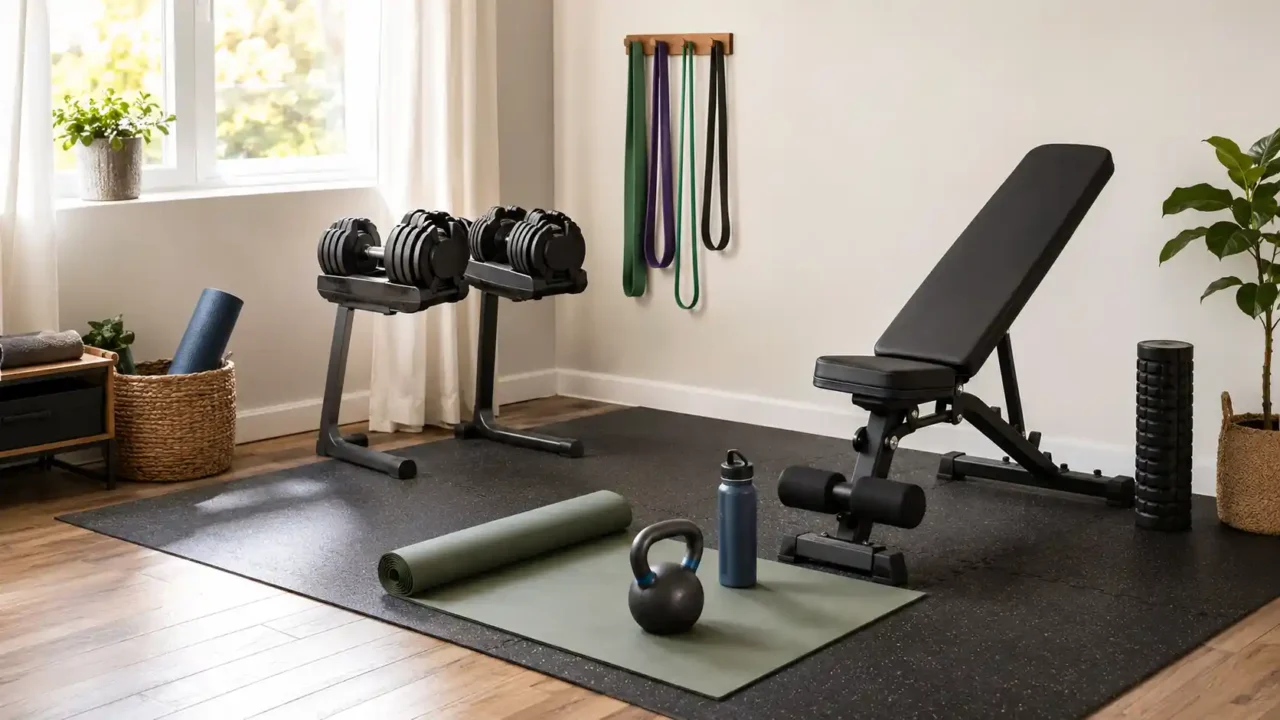
The most useful home gym essentials for beginners are versatile tools that support several exercises without occupying too much space.
Adjustable dumbbells
Adjustable dumbbells are often the single most useful item in a beginner home gym. They replace multiple fixed-weight pairs and let you change resistance quickly. Look for:
- A weight range that covers light to moderate loads for your current level
- A secure locking mechanism
- Comfortable grip and a compact footprint
Adjustable dumbbells work well for presses, rows, lunges, and many other movements. They are especially helpful in small spaces where a full dumbbell rack is not practical.
Resistance bands
Resistance bands are lightweight, portable, and inexpensive. They can:
- Add variety to bodyweight exercises
- Assist or progress movements like pull-ups and dips
- Support mobility and warm-up routines
Bands come in different resistance levels and styles (loop bands, tube bands with handles, therapy bands). A small set of bands with varying tensions can cover most beginner needs.
Kettlebells
A single moderate-weight kettlebell can support swings, goblet squats, presses, carries, and more. Kettlebells are compact and durable, making them a strong option for small home gyms. If you are new to kettlebell training, start with a weight that allows you to maintain control and proper form.
Pull-up bar or suspension trainer
If your space and budget allow, a doorway pull-up bar or a suspension trainer adds upper-body and core options. These tools use your body weight for resistance and can be stored easily when not in use.
Weight bench (optional but useful)
A flat or adjustable bench expands what you can do with dumbbells and bodyweight exercises. For beginners, a simple, sturdy flat bench is often enough. An adjustable bench adds incline and decline options but takes up more space and usually costs more.
Cardio, mobility, and recovery options
Cardio equipment is optional for a beginner home gym. Many people meet their activity goals through walking, jogging, cycling, or online workout videos. That said, a few compact options can add variety and convenience.
Cardio and recovery equipment can complement the core home gym essentials for beginners when it supports activities you genuinely enjoy.
Low-cost cardio options
- Jump rope – Inexpensive, portable, and effective for short, intense cardio sessions.
- Bodyweight circuits – Movements like marching in place, step-ups on a sturdy surface, or low-impact circuits can raise your heart rate without any equipment.
- Walking or outdoor activity – If weather and safety allow, walking is a simple way to accumulate weekly activity minutes.
Compact cardio machines (optional)
If you prefer a machine, consider:
- Foldable treadmill or under-desk treadmill – Useful for walking or light jogging in small spaces.
- Compact stationary bike – Often quieter and smaller than a treadmill.
- Rowing machine – Provides a full-body workout; some models fold for storage.
Before buying, measure your space, check noise levels if you live in an apartment, and consider how often you will realistically use the machine.
Mobility and recovery tools
Mobility work and recovery are often overlooked but important for long-term consistency. Useful basics include:
- Exercise mat – Cushions your body during floor work and defines your workout area.
- Foam roller – Helps with muscle tightness and recovery.
- Light mobility tools – Such as a lacrosse ball or small massage ball for targeted areas.
Flooring, storage, and home gym safety
A safe, organized setup makes it easier to train consistently and helps protect your floors and equipment.
Safe flooring and practical storage are often overlooked home gym essentials for beginners, especially in small or shared rooms.
Home gym flooring
Flooring is one of the most important basics for home gym setups, especially on hard surfaces. Options include:
- Rubber mats or interlocking tiles – Protect floors from weights and reduce noise.
- Padded exercise mats – Suitable for bodyweight work, yoga, and mobility routines.
- Area rugs or carpet with a mat overlay – Less ideal for heavy weights but can work for light training.
Choose flooring that is thick enough for your activities and stable enough to prevent slipping or tripping.
Storage solutions
Good storage keeps your space functional and reduces clutter:
- Wall-mounted racks or hooks – For bands, jump ropes, and suspension trainers.
- Dumbbell or kettlebell stands – Keep weights off the floor and organized.
- Shelving or bins – For smaller accessories like gloves, towels, and notebooks.
Safety considerations
Safety is a key part of any home gym setup checklist for beginners. Practical steps include:
- Follow manufacturer instructions for assembly and use.
- Check current recall notices for exercise equipment through the CPSC Exercise Equipment Recall Notices page.
- Inspect bands, cables, and connectors regularly for wear or damage.
- Use stable surfaces and avoid stacking unstable items.
- Keep your exercise area clear of tripping hazards.
- If you are new to strength training, consider learning basic movement patterns from a qualified professional.
Home gym setup checklist for beginners
Use this concise checklist to plan your setup. Not every item is required for every reader; choose based on your goals, space, and budget.
Planning
Strength basics
Cardio and mobility
Flooring and storage
Safety
Sample setups for different spaces and budgets
These examples illustrate how the basics for home gym setups can be adapted. They are not one-size-fits-all recommendations.
Small apartment, limited budget
- Adjustable dumbbells (moderate weight range)
- Light, medium, and heavy resistance bands
- Jump rope
- Exercise mat
- Wall-mounted storage hooks
- Rubber mat section for floor protection
This setup supports most beginner strength and mobility work and can be stored in a closet or corner when not in use.
Medium room, moderate budget
- Adjustable dumbbells with a wider weight range
- Kettlebell
- Adjustable bench
- Resistance bands
- Foam roller and massage ball
- Rubber flooring tiles
- Compact stationary bike or foldable treadmill (optional)
This configuration adds more strength options and a dedicated cardio machine while still fitting in a spare bedroom or office.
Shared space, flexible budget
- Suspension trainer (doorway-mounted)
- Adjustable dumbbells
- Resistance bands
- Collapsible bench or sturdy flat bench
- Exercise mat
- Portable storage cart or bin
- Compact rowing machine or under-desk treadmill (optional)
This arrangement prioritizes equipment that can be set up and put away easily, which is helpful when the room serves multiple purposes.
Frequently asked questions
What are the most important home gym essentials for beginners? For many beginners, adjustable dumbbells, resistance bands, and an exercise mat form a strong foundation. These items are versatile, relatively compact, and support a wide range of movements.
Do I need a cardio machine? No. Walking, jogging, cycling, jump rope, and bodyweight circuits can all contribute to your weekly activity. Cardio machines are optional and most useful if you enjoy them and will use them consistently.
How much space do I really need? You can start with as little as the area of a yoga mat. For more equipment, a small corner of a room or a section of a garage is often enough. The key is having enough space to move safely in all directions.
Is a weight bench necessary? Not strictly. Many exercises can be done on the floor or standing. A bench is helpful if you want more variety with dumbbell or bodyweight work, but it is not a must-have for every beginner.
How do I keep my home gym safe? Follow manufacturer instructions, check recall notices, inspect equipment regularly, use stable surfaces, and keep your workout area clear. If you are unsure about your form or program, seek guidance from a qualified professional.
Conclusion
A practical beginner home gym does not require a large space or a large budget. By starting with clear goals, measuring your space, and choosing versatile equipment, you can build a setup that supports consistent training and long-term progress. Focus on the home gym essentials for beginners that match your situation: a few well-chosen strength tools, simple cardio and mobility options, and safe, organized flooring and storage.
Use the checklist and sample setups in this guide as flexible starting points, then adjust as your needs evolve. For readers who want additional help choosing gear and comparing options, you can explore more practical buying guides to support your setup decisions. By selecting home gym essentials for beginners carefully, you can create a safe and flexible workout space without buying unnecessary equipment.