Sunglasses for daily wear should do more than complete an outfit. A good pair should feel comfortable, protect your eyes from bright sunlight, reduce glare, match your everyday style, and survive regular use without becoming annoying after one week.
Daily sunglasses are different from statement sunglasses. You may wear them while driving, walking, shopping, traveling, commuting, sitting outside, or running errands. That means comfort, fit, lens quality, and practical protection matter just as much as color and frame shape.
The best sunglasses for daily wear are the pair you actually reach for every day because they feel easy, useful, and natural with your routine.
Start With UV Protection
Before choosing sunglasses for daily wear, check the UV protection label. Style matters, but eye protection should come first.
Look for labels that mention 100% UVA and UVB protection, UV400, or equivalent UV-blocking protection. Dark lenses alone do not guarantee protection. A lens can look very dark and still fail to block harmful ultraviolet rays.
This is important because daily sunglasses are often worn for short, repeated exposure: driving to work, walking outside, shopping, outdoor cafés, school runs, errands, and weekend trips. Those small moments add up.
The American Optometric Association recommends sunglasses that block ultraviolet radiation when you are in sunlight, and buyer-facing guidance commonly points to UV400 or 100% UV protection as the key label to check. American Optometric Association UV protection guidance
Do Not Confuse Dark Lenses With Protection
A common mistake is assuming darker lenses are safer. They are not automatically safer.
Sunglasses for daily wear should be chosen for UV protection first, then comfort, tint, polarization, and style. Lens darkness mainly affects how bright the world feels. It does not automatically tell you how much UV protection the lenses provide.
This is why cheap fashion sunglasses can be risky if the protection label is unclear. A very dark lens may make your eyes feel more relaxed in bright light, but you still need real UV protection.
When in doubt, buy from a reputable seller and check the product details carefully before choosing sunglasses for daily wear.
Check the Frame Fit
Fit affects comfort and protection. Sunglasses for daily wear should sit securely without pinching your nose, pressing behind your ears, or sliding down your face.
A good fit should feel stable when you walk, turn your head, look down, or move between indoor and outdoor spaces. If the sunglasses constantly slide, you will stop wearing them.
Check these fit details:
- nose bridge comfort
- temple arm pressure
- frame width
- lens coverage
- weight
- how close the lenses sit to your face
- whether the frame touches your cheeks
A pair that looks great in photos may not work for your face shape. Daily sunglasses need to feel good during normal movement, not just for a mirror test.
Choose a Shape That Matches Your Daily Style
Sunglasses for daily wear should match the clothes you wear most often. If your everyday wardrobe is casual, choose frames that work with jeans, sneakers, T-shirts, jackets, and simple dresses. If your style is more polished, choose cleaner frames that work with shirts, blazers, coats, or smart casual outfits.
Classic frame styles are usually safer for daily wear:
- wayfarer-style frames
- round frames
- soft square frames
- aviator-style frames
- rectangle frames
- cat-eye frames
- oval frames
You do not need to follow strict face-shape rules. They can help, but comfort and confidence matter more. The best sunglasses for daily wear are the ones that feel natural with your actual wardrobe.
Think About Lens Color
Lens color affects comfort and visibility. It also affects how you see contrast and brightness.
Gray lenses usually reduce brightness while keeping colors more natural. Brown or amber lenses can increase contrast and may feel warmer. Green lenses can reduce glare while keeping decent color balance. Rose or red-toned lenses may feel softer in some light conditions.
For daily sunglasses, choose a lens color that works across many situations. Very dramatic tints can be fun, but they may not feel useful every day.
If you drive often, avoid lenses that distort traffic light colors or make your vision feel unnatural. Sunglasses for daily wear should support clear vision, not just style.
Decide Whether You Need Polarized Lenses
Polarized lenses reduce glare from reflective surfaces such as roads, water, glass, and car hoods. They can be very useful if you drive, walk near water, spend time outdoors, or get eye fatigue from bright reflections.
However, polarization is not the same as UV protection. Sunglasses for daily wear can be polarized and still need a proper UV protection label.
Polarized lenses can also make some screens harder to see, especially car displays, phones, ATMs, or certain dashboards. If you use screens often while wearing sunglasses, test polarization before buying if possible.
For many people, polarized sunglasses are a good daily upgrade, but they are not mandatory. The first priority remains UV protection and comfort.
Check Weight for All-Day Comfort
Sunglasses for daily wear should feel light enough that you forget about them. Heavy frames may look premium, but they can become uncomfortable on the nose or behind the ears.
Lightweight plastic, acetate, or metal frames can all work if the design is balanced. The key is how the weight sits on your face.
If the sunglasses leave marks, slide down constantly, or press too hard, they may not be right for daily use.
This matters more than people expect. A pair of sunglasses can look perfect but still stay in a drawer because it feels heavy after 30 minutes.
Look for Durable Hinges
Hinges are one of the first parts to fail on cheap sunglasses. Sunglasses for daily wear are opened, closed, stored, dropped, pushed onto the head, placed in bags, and handled many times.
Check whether the hinges feel smooth and stable. The arms should not feel loose or overly stiff. If the frame creaks or bends too easily, it may not last.
Spring hinges can add comfort because they flex slightly, but standard hinges can also work if they are well made.
A durable frame is especially important if you carry sunglasses in a bag, car, desk drawer, or travel pouch.
Choose Frames That Give Enough Coverage
Small lenses may look stylish, but they may not block enough sunlight from the sides or top. Sunglasses for daily wear should give enough coverage for normal outdoor use.
Larger lenses or slightly wraparound designs can reduce side glare. This can be useful when walking, driving, traveling, or spending time near reflective surfaces.
That does not mean you need oversized frames. You just need enough coverage that bright light does not constantly enter around the edges.
If you spend a lot of time outdoors, lens coverage becomes more important. If you mostly wear sunglasses for short errands, a medium-size frame may be enough.
Think About Scratch Resistance
Daily sunglasses get handled roughly. They go into bags, pockets, car compartments, desk drawers, and travel cases.
Sunglasses for daily wear should have lenses that resist normal scratches. No lens is impossible to scratch, but better coatings and careful storage help.
A hard case is useful if you carry sunglasses in a bag. A soft pouch is better than nothing, but it may not protect against pressure.
Avoid placing sunglasses lens-down on tables or car consoles. Even small scratches can become distracting in bright light.
If you are comparing a cheaper pair and a slightly more expensive pair, durability and lens coating may be worth the difference.
Match Sunglasses With Travel and Everyday Accessories
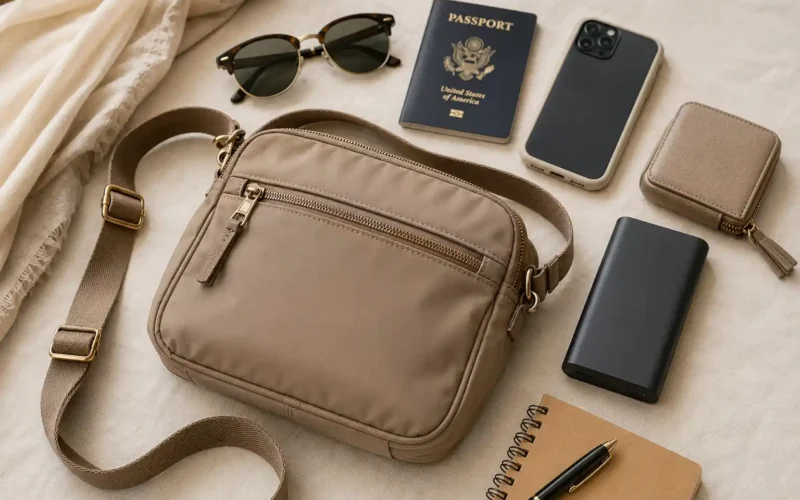
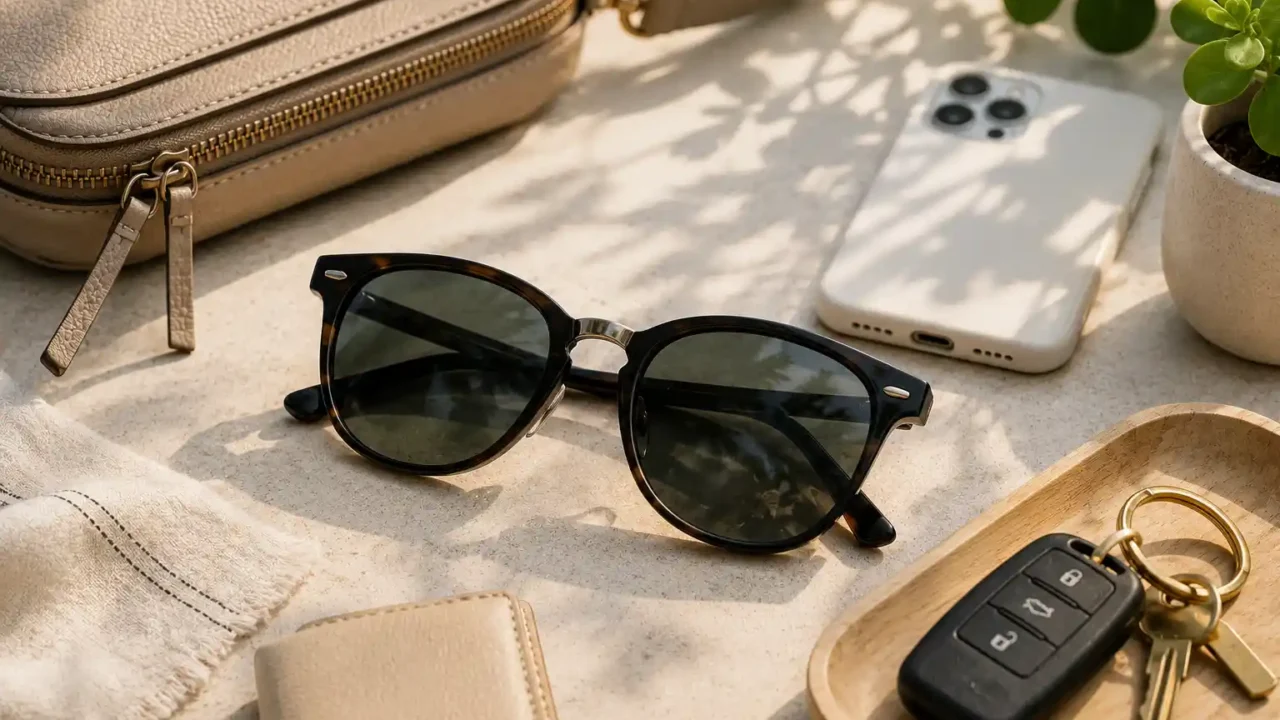
Sunglasses for daily wear often become part of a broader everyday setup. They sit beside your phone, wallet, bag, power bank, keys, and travel items.
If you travel often, choose sunglasses that fit comfortably in your bag and case. Our everyday crossbody bag for travel guide can help you think about the daily carry setup around small essentials like sunglasses, phone, wallet, and compact travel items.
If you carry jewelry, watches, or small accessories on trips, our travel jewelry organizer for women guide can help you keep delicate items separate instead of mixing them into one bag.
Daily sunglasses work best when they fit naturally into your routine instead of becoming another item you forget at home.
Be Careful With Very Cheap Deals
A low price can be fine, but sunglasses for daily wear should not be chosen only because they are cheap. You still need protection, comfort, and build quality.
If the listing does not clearly mention UV protection, lens material, frame size, or seller reliability, slow down before buying. A stylish photo does not prove quality.
Our how to spot a useful online deal before you buy guide can help you check whether a discount is actually useful or just attractive marketing.
For sunglasses, the best deal is not the lowest price. It is the pair you will wear often and trust in daily sunlight.
Decide If You Need Prescription Sunglasses
If you normally wear prescription glasses, regular sunglasses may not be enough. You may need prescription sunglasses, clip-ons, fit-over sunglasses, or transition lenses depending on your routine.
Prescription sunglasses can be useful for driving, travel, and outdoor errands. They let you see clearly while also reducing bright light.
Clip-ons can be more affordable, but they may not look as polished. Fit-over sunglasses can work but may feel bulkier.
The right choice depends on how often you are outdoors and whether you need clear distance vision while wearing sunglasses for daily wear.
Think About Where You Will Store Them
Storage affects whether you actually use the sunglasses. If they are always hidden in a drawer, you may forget them. If they are loose in your bag, they may get scratched.
Keep sunglasses for daily wear in a predictable place: near your keys, inside your everyday bag, in your car, or beside your entryway.
A case helps protect them, but the case should not be so bulky that you stop carrying it. For daily use, a slim hard case or structured pouch can be a good balance.
Small habit changes can make sunglasses easier to use every day.
Avoid These Buying Mistakes
Do not buy sunglasses without checking UV protection.
Do not assume dark lenses mean better protection.
Do not buy frames that slide down your face.
Do not choose lenses that distort colors too much for driving.
Do not buy oversized frames if they feel heavy or uncomfortable.
Do not ignore hinge quality.
Do not carry sunglasses loose in a bag without a case.
Do not choose only by trend if you want daily use.
A smart pair of sunglasses for daily wear should work beyond one outfit, one photo, or one season.
Best Features to Look For
The best sunglasses for daily wear usually include:
- 100% UVA and UVB protection or UV400 labeling
- comfortable fit
- lightweight frame
- clear lenses
- useful lens tint
- optional polarization
- durable hinges
- scratch-resistant lenses
- enough coverage
- style that matches your daily wardrobe
- protective case
You do not need every premium feature. The right pair depends on your face, routine, style, and budget.
For most people, UV protection, comfort, and everyday style are the most important checks.
Final Thoughts
Sunglasses for daily wear should be practical, protective, comfortable, and easy to match with your normal outfits. Start with UV protection, then check fit, lens color, polarization, weight, hinge quality, and storage.
The best sunglasses for daily wear are not always the most expensive or the trendiest. They are the pair that feels good enough to wear often and reliable enough to keep close.
Choose sunglasses for daily wear that protect your eyes, match your routine, and feel comfortable from morning errands to weekend trips.
A comfortable pair of sunglasses for daily wear can become one of your most-used accessories because it supports both style and everyday function.