A reusable water bottle buying guide should help you choose a bottle you will actually carry, clean, and use every day. This reusable water bottle buying guide is built for practical daily use, not just product features that look good online.
Many bottles look good online but fail in normal life. Some are too heavy. Some leak in bags. Some are hard to clean. Some do not fit car cup holders. Others keep drinks cold but are uncomfortable to drink from during workouts or travel.
The right bottle depends on where you use it most: your desk, gym bag, car, school, travel backpack, stroller, bedside table, or outdoor routine.
This reusable water bottle buying guide focuses on practical features: size, material, lid style, insulation, cleaning, grip, portability, and long-term use.
You do not need the most expensive bottle. You need the one that fits your routine.
Why a reusable water bottle is worth choosing carefully
A reusable water bottle is one of those products that can become part of your daily system.
If it is easy to refill, pleasant to drink from, and simple to clean, you are more likely to use it. If it leaks, tastes strange, or feels awkward, it usually ends up in a cabinet.
Water is usually a better everyday drink than sugary drinks, and the CDC notes that drinking water can help manage calories when it replaces drinks with calories. That makes the bottle itself a small but useful daily habit tool.
A good reusable water bottle buying guide should not push one type for everyone. It should help you match the bottle to your real life.
Before buying, ask:
- Will I carry this daily?
- Does it fit my bag or cup holder?
- Is it easy to clean?
- Does it leak when sideways?
- Is the lid comfortable?
- Do I need insulation?
- Is the bottle too heavy when full?
- Can I replace parts later?
The best water bottle is the one you use consistently.
1. Choose the right size first
Size is the first decision because it affects everything else.
A small bottle is easier to carry but needs more refills. A large bottle holds more water but becomes heavier, harder to pack, and sometimes uncomfortable to use while walking or exercising.
Common sizes include:
- 12–16 oz for short errands, kids, or small bags
- 18–24 oz for desks, commutes, and daily carry
- 26–32 oz for gym sessions, longer workdays, and travel
- 40 oz or more for long outdoor days or people who dislike refilling often
For most people, the practical middle range is 20–32 oz.
A reusable water bottle buying guide should always start with size because a bottle that is too big often gets left behind. A bottle that is too small may not support your day.
Think about where you refill. If you have easy access to water at work or home, a moderate bottle may be enough. If you drive a lot, travel, or work outdoors, a larger size may make more sense.
2. Compare stainless steel, plastic, and glass
Material affects taste, weight, insulation, durability, and cleaning.
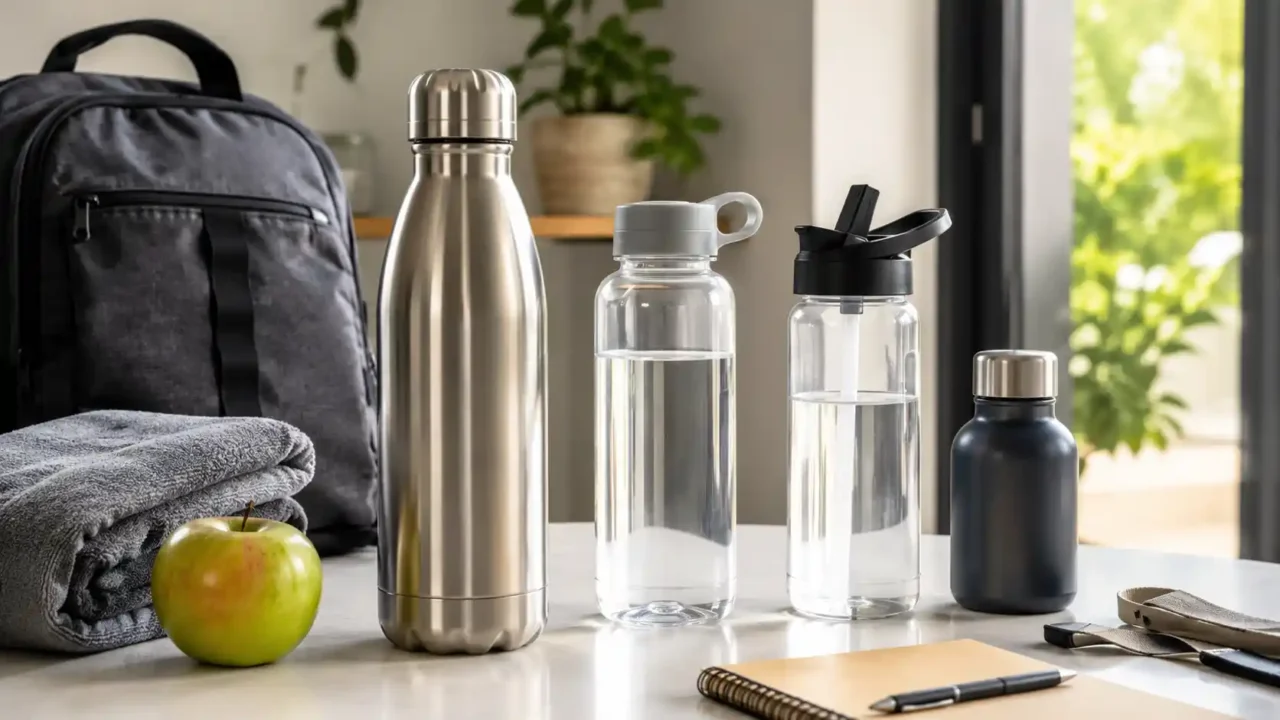
Stainless steel bottles are popular because they are durable and often insulated. They can keep drinks cold for hours and usually handle daily use well. The downside is weight. A large stainless-steel bottle can become heavy when full.
Plastic bottles are lighter and often cheaper. They can be useful for gym bags, kids, travel, or casual daily use. Look for BPA-free materials and avoid bottles that retain smells or stain easily.
Glass bottles feel clean and do not usually hold taste, but they are heavier and more fragile. Many come with silicone sleeves for grip and protection. They are better for home, office, or light daily use than rough travel.
A practical reusable water bottle buying guide should not treat one material as automatically best. Match the material to the environment.
Choose stainless steel if you want durability and cold drinks.
Choose plastic if you want light weight and easy carrying.
Choose glass if taste and home or office use matter most.
A useful reusable water bottle buying guide should always connect material choice with weight, cleaning, taste, and where you carry the bottle most often.
3. Decide whether insulation matters
Insulation is useful, but not always necessary.
An insulated bottle can keep water cold during hot days, gym sessions, road trips, outdoor walks, or long desk hours. This is especially helpful in warm climates or when you dislike room-temperature water.
But insulation adds weight and cost. If you mostly drink water quickly at home or refill often, a non-insulated bottle may be easier and cheaper.
Insulation matters most for:
- gym sessions
- summer travel
- long commutes
- outdoor activities
- hot cars
- bedside use
- people who prefer cold water all day
It matters less for:
- short errands
- home use
- kids who need lightweight bottles
- people who refill often
- bags where weight is a concern
This reusable water bottle buying guide recommends insulation if comfort affects whether you actually drink water. If cold water makes you use the bottle more often, insulation is worth it. For hot commutes, gym bags, and long travel days, this reusable water bottle buying guide makes insulation a comfort feature, not just a premium upgrade.
4. Choose the right lid type
The lid can make or break the bottle.
A bottle with the wrong lid may leak, feel awkward, spill during driving, or become annoying to clean.
Common lid types include:
- screw cap
- straw lid
- chug lid
- flip lid
- sports squeeze top
- spout lid
- handle lid
A straw lid is convenient for desks, cars, and casual sipping. It is not always ideal for hygiene if it is hard to clean.
A chug lid works well for workouts, travel, and quick drinking.
A screw cap is simple and often leak-resistant, but it is less convenient when walking or driving.
A flip lid can be fast and easy, but only if the hinge and seal are strong.
When comparing products, read reviews specifically for leaks. Do not rely only on product photos.
A good reusable water bottle buying guide should pay close attention to the lid because many bottles fail there first. This reusable water bottle buying guide treats the lid as a daily-use feature because leaks, spills, and awkward drinking usually start there.
5. Check cleaning difficulty before buying
Cleaning is one of the most important buying factors.
If a bottle is annoying to wash, it will not stay in daily use. Narrow openings, complex lids, hidden seals, soft straws, and many tiny parts can make cleaning harder.
Look for:
- wide mouth opening
- dishwasher-safe parts
- removable seals
- simple lid design
- straw brush access
- fewer small parts
- replacement lids or straws
Wide-mouth bottles are easier to clean and easier to fill with ice. Narrow bottles may be easier to drink from but harder to wash.
If you use flavored drinks, protein shakes, electrolytes, lemon, or iced coffee, cleaning becomes even more important.
This reusable water bottle buying guide favors bottles that are simple to clean over bottles with too many clever features.
A bottle you clean easily is a bottle you use longer. A reusable water bottle buying guide should always favor bottles that are easy to wash, easy to refill, and simple enough to keep in rotation.
6. Think about work, gym, and travel use separately
A bottle that works at your desk may not work at the gym.
For work, look for:
- stable base
- comfortable sipping
- clean appearance
- cup holder fit
- no sweating on the desk
- quiet lid
- easy refilling
For gym use, look for:
- strong grip
- one-hand drinking
- chug or straw lid
- leak resistance
- durability
- light enough to carry
- enough capacity for the session
For travel, look for:
- leakproof lid
- bag-friendly shape
- carry handle
- cup holder fit
- tough material
- easy airport refilling
- secure cap
For short trips, make sure your bottle fits inside or beside a travel backpack for weekend trips without leaking. The same bottle can work for all three, but not always.
A reusable water bottle buying guide should help you decide whether you need one all-purpose bottle or two different bottles for different routines.
7. Look at grip, base, and portability
Small design details matter in daily use.
A bottle can have great insulation and still be frustrating if it slips, tips over, or does not fit your bag.
Check:
- handle placement
- carrying loop
- textured grip
- base width
- cup holder compatibility
- bottle height
- backpack side-pocket fit
- one-hand usability
- whether it rolls if dropped
If you commute, cup holder fit matters. If you walk a lot, a handle matters. If you use a backpack, side-pocket fit matters. If you work at a desk, a stable base matters.
A practical reusable water bottle buying guide should include these details because they decide whether a bottle becomes a daily carry item or a shelf item.
Smart features: useful or unnecessary?
Some bottles include time markers, reminder lines, fruit infusers, built-in filters, Bluetooth reminders, or storage compartments.
These features can be useful for some people, but they are not essential for everyone.
Time markers may help if you forget to drink. Filters may help when water taste is a concern. Infusers can be useful if you like fruit-flavored water. But extra features often mean extra cleaning and more parts.
Before buying a feature-heavy bottle, ask:
- Will I use this feature weekly?
- Does it make the bottle harder to clean?
- Does it add weight?
- Is it replaceable?
- Does it solve a real problem?
Simple bottles often last longer because they have fewer parts to fail.
What to avoid
Avoid bottles that look good but fail on daily basics.
Be careful with:
- unclear materials
- very cheap lids
- poor leak reviews
- narrow openings
- many hard-to-clean parts
- bottles too large for normal carry
- bottles too small for your routine
- designs that do not fit cup holders
- bottles with no replacement parts
- coatings that chip easily
Also avoid buying based only on a viral video. This is especially important when buying trending products online, where viral bottles can look better than they perform.
A bottle can look perfect online but still be wrong for your routine. This is where a reusable water bottle buying guide helps you slow down and compare real use, not just appearance.
How much should you spend?
You can find useful reusable water bottles at many price points.
Lower-cost plastic bottles can work well for simple daily use. Mid-range stainless steel bottles often offer better durability and insulation. Premium bottles may be worth it if you use them daily and they solve a real comfort problem.
Spend more when:
- you need long cold retention
- you carry it every day
- leakproof performance matters
- you want durable stainless steel
- replacement lids are available
- the bottle fits multiple routines
Spend less when:
- you need a backup bottle
- you are testing size preferences
- kids may lose it
- you mainly use it at home
- insulation is not important
A reusable water bottle buying guide should not push price as the main sign of quality. The better question is whether the bottle removes friction from your daily routine. If price is the main reason you are interested, check whether the deal is actually useful before buying another everyday bottle.
Best uses by lifestyle
For desk workers, a 20–30 oz insulated bottle with a straw or chug lid can work well.
For gym use, a durable 24–32 oz bottle with a strong handle and easy one-hand drinking is usually practical.
For travelers, a leakproof bottle that fits a backpack pocket and airport refill stations is more important than maximum size.
For small kitchens or shared homes, choose a bottle that is easy to clean, easy to store, and not too bulky.
For outdoor use, durability, capacity, and grip matter more than appearance.
The right bottle is not universal. It is personal. Use this reusable water bottle buying guide as a simple checklist before buying: size, material, lid, insulation, cleaning, portability, and real daily comfort.
Final thoughts
A reusable water bottle buying guide should help you avoid clutter and choose a bottle that becomes part of your daily routine.
Start with size, then material, lid type, insulation, cleaning, and portability. Ignore hype until the basics are right.
The best reusable water bottle is easy to carry, easy to clean, comfortable to drink from, and reliable enough to trust in a bag.
Choose the bottle that fits your workday, gym routine, travel style, and real habits. That is the one you will keep using.